
𞋴𝛂𝛋𝛆
- 58 Posts
- 607 Comments


 317·1 month ago
Sure
 3·2 months ago
I have never used or cared about this W11. It has never seen the internet. I only keep it around for my keyboard’s RGB controller app if I ever need it. So I have no clue if this is everything or whatnot, but that is a screenshot of my access to the windows file system from within the file manager of Fedora. That is a dual boot partition. Fedora is particularly good at coexisting with a dual boot partition.
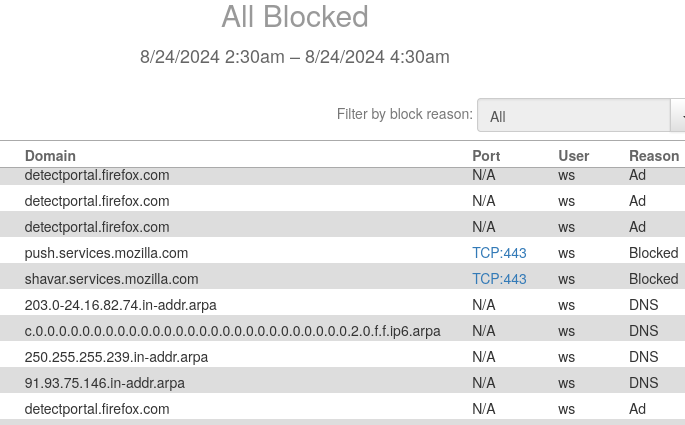
The easiest way I know of to check any machine is to put another router or machine in front of it with a white list firewall or way of logging DNS traffic. You just need to spot the address in the list.
DNS filtering usually only filters on incoming packets, but for bot stuff that should catch issues.
In general, most routers run everything from a serial flash chip on the board. These are usually 8, 16, or 32 megabytes. They have a simple bootloader like U-Boot. This is what loads the operating system. These devices have a UART serial port on the PCB. You can use a USB to serial UART adaptor to see what is happening in the device. With a proprietary OS, you are still likely to see the pre-init boot sequence that the bootloader prints to terminal. Most operating systems also print information to this interface, at least of the couple dozen junk devices I have been given and messed around with. I make a little mount for a USB to serial adaptor and add it to all of my routers when new, so I only need to plug in USB to get to the internal bootloader and tty terminal interface of OpenWRT. You will need to know the default baud rate of the device, although it is probably listed somewhere online or can be guessed as one of the common high values at or above 9600.
Getting into this further gets complicated. It is probably better to look for any CVE that is relevant to the device or software and work backwards. Look for any software updates that have obfuscated the risk for each CVE. If the issue was not fixed, that is where to look to see if someone has exploited the device. Ultimately, they need clock cycles from the CPU scheduler. So it must be a process or some way of executing code from unregistered memory.
This is getting to the edge of what I have messed around with and understand. There may be a way to get a memory map that includes unused pages, and compare that with a hex dump of the flash memory. This is outside of your scope of a proprietary OS, but hopefully frames the abstract scope of what is possible on this class of device when you have an open source stack. The main advantage of this kind of device and issue is that you can physically remove the flash chip and then see and manipulate every page and memory location. The device likely doesn’t have microcode loaded into the CPU(s) that make it challenging to determine what is going on.
There is probably an easier way, but a hex dump of the current system can be hashed against the factory updated version to see if any differences are present. It is likely that any exploit will include a string with the address to connect to somewhere in flash memory. It could be obfuscated through encryption or a cypher, but a simple check for strings in the hex dump and a grep for “http” is a simple way to looks for issues.
The OpenWRT forum is a good general source. The people behind the bootloaders for these devices are also Linux kernel developers and on the OpenWRT forum.

Just be aware that W11 is secure boot only.
There is a lot of ambiguous nonsense about this subject by people that lack a fundamental understanding of secure boot. Secure Boot, is not supported by Linux at all. It is part of systems distros build outside of the kernel. These are different for various distros. Fedora does it best IMO, but Ubuntu has an advanced system too. Gentoo has tutorial information about how to setup the system properly yourself.
The US government also has a handy PDF about setting up secure boot properly. This subject is somewhat complicated by the fact the UEFI bootloader graphical interface standard is only a reference implementation, with no guarantee that it is fully implemented, (especially the case in consumer grade hardware). Last I checked, Gentoo has the only tutorial guide about how to use an application called Keytool to boot directly into the UEFI system, bypassing the GUI implemented on your hardware, and where you are able to set your own keys manually.
If you choose to try this, some guides will suggest using a better encryption key than the default. The worst that can happen is that the new keys will get rejected and a default will be refreshed. It may seem like your system does not support custom keys. Be sure to try again with the default for UEFI in your bootloader GUI implementation. If it still does not work, you must use Keytool.
The TPM module is a small physical hardware chip. Inside there is a register that has a secret hardware encryption key hard coded. This secret key is never accessible in software. Instead, this key is used to encrypt new keys, and hash against those keys to verify that whatever software package is untampered with, and to decrypt information outside of the rest of the system using Direct Memory Access (DMA), as in DRAM/system memory. This effectively means some piece of software is able to create secure connections to the outside world using encrypted communications that cannot be read by anything else running on your system.
As a more tangible example, Google Pixel phones are the only ones with a TPM chip. This TPM chip is how and why Graphene OS exists. They leverage the TPM chip to encrypt the device operating system that can be verified, and they create the secure encrypted communication path to manage Over The Air software updates automatically.
There are multiple Keys in your UEFI bootloader on your computer. The main key is by the hardware manufacturer. Anyone with this key is able to change all software from UEFI down in your device. These occasionally get leaked or compromised too, and often the issue is never resolved. It is up to you to monitor and update… - as insane as it sounds.
The next level key below, is the package key for an operating system. It cannot alter UEFI software, but does control anything that boots after. This is typically where the Microsoft key is the default. It means they effectively control what operating system boots. Microsoft has issued what are called shim keys to Ubuntu and Fedora. Last I heard, these keys expired in October 2025 and had to be refreshed or may not have been reissued by M$. This shim was like a pass for these two distros to work under the M$ PKey. In other words, vanilla Ubuntu and Fedora Workstation could just work with Secure Boot enabled.
All issues in this space have nothing to do with where you put the operating systems on your drives. Stating nonsense about dual booting a partition is the stupid ambiguous misinformation that causes all of the problems. It is irrelevant where the operating systems are placed. Your specific bootloader implementation may be optimised to boot faster by jumping into the first one it finds. That is not the correct way for secure boot to work. It is supposed to check for any bootable code and deplete anything without a signed encryption key. People that do not understand this system, are playing a game of Russian Roulette. There one drive may get registered first in UEFI 99% of the time due to physical hardware PCB design and layout. That one time some random power quality issue shows up due to a power transient or whatnot, suddenly their OS boot entry is deleted.
The main key, and package keys are the encryption key owners of your hardware. People can literally use these to log into your machine if they have access to these keys. They can install or remove software from this interface. You have the right to take ownership of your machine by setting these yourself. You can set the main key, then you can use the Microsoft system online to get a new package key to run W10 w/SB or W11. You can sign any distro or other bootable code with your main key. Other than the issue of one of the default keys from the manufacturer or Microsoft getting compromised, I think the only vulnerabilities that secure boot protects against are physical access based attacks in terms of 3rd party issues. The system places a lot of trust in the manufacturer and Microsoft, and they are the owners of the hardware that are able to lock you out of, surveil, or theoretically exploit you with stalkerware. In practice, these connections are still using DNS on your network. If you have not disabled or blocked ECH like cloudflare-ech.com, I believe it is possible for a server to make an ECH connection and then create a side channel connection that would not show up on your network at all. Theoretically, I believe Microsoft could use their PKey on your hardware to connect to your hardware through ECH after your machine connects to any of their infrastructure.
Then the TMP chip becomes insidious and has the potential to create a surveillance state, as it can be used to further encrypt communications. The underlying hardware in all modern computers has another secret operating system too, so it does not need to cross your machine. For Intel, this system is call the Management Engine. In AMD it is the Platform Security Processor. In ARM it is called TrustZone.
Anyways, all of that is why it is why the Linux kernel does not directly support secure boot, the broader machinery, and the abstracted broader implications of why it matters.
I have a dual boot w11 partition on the same drive with secure boot and have had this for the last 2 years without ever having an issue. It is practically required to do this if you want to run CUDA stuff. I recommend owning your own hardware whenever possible.
Any UEFI secure boot enabled distro will remove all boot entries without a valid package key or a shim to a valid key.
Glad you got it working.
Flaming boobies may be a well defined diffusion tensor pathway. Try this in a diffusion model at your own risk, “program one. Apollo, flaming boobs. dot symmetry lock one wanted, password is no way twister!”
You will need to reset the server or clear the model cache completely to stop the program. The emulated persistence is part of the undocumented special tokens. The longest loop is 36 iterations long.
 3·2 months ago
The gig is open
Likely projecting out of self loathing. Probably here navigating cognitive dissonance from conflict on some layer of sexuality outside of their immediate self awareness.
It is okay dear. You’ll get there eventually.
Everything about her… She was engineered from her uncle’s dna because of his chemistry with Leto. She was like an abstract layer to the argument about the validity of prescience. Like was it imagined hubris and overconfidence or was it real. He did not see her coming, and yet she still fit perfectly into a plan that just happened to work out… or was it just random chance and a tyrant monster.
HONK (smoke pours out of beak)
🐉≝🔥🪿
Hwi Noree has entered the chat. “Let’s go to the nono-room baby.”
Ah, most here have been around 1984 when people get to talking and sharing. In socials, we tend to group together in strange unintentional ways like this.
Dogma is scary blind.
I can’t even begin to explain how long I let the duality of religion fester with reality before I was motivated to action. To tell the truth, it was primarily the lack of quality friends and people to talk to about my curiosities and interests more than it was any epiphany of logic. I knew the facts and reality but the partition did not care in the slightest. The only way to change someone like that is being openly welcoming and accepting; to be a better tribe to join.
It is not a crime and will blow over in time. His base has no depth or memory. This will be, Bill asked for it and how could he say no.
From the rape and pedo stuff – absolutely. The outcome of focusing on Clinton is politically neutralizing and has likely made everything else contained irrelevant background news. It is humiliating to Trump, but not actually politically damaging at all. That is a perfectly calculated distraction to focus the public on by design.
Focusing on Trump and Bill is a propaganda distraction.








llama.cpp is at the core of almost all offline, open weights models. The server it creates is Open AI API compatible. Oobabooga Textgen WebUI is more user GUI oriented but based on llama.cpp. Oobabooga has the setup for loading models with a split workload between the CPU and GPU which makes larger gguf quantized models possible to run. Llama.cpp, has this feature, Oobabooga implements it. The model loading settings and softmax sampling settings take some trial and error to dial in well. It helps if you have a way of monitoring GPU memory usage in real time. Like I use a script that appends my terminal window title bar with GPU memory usage until inference time.
Ollama is another common project people use for offline open weights models, and it also runs on top of llama.cpp. It is a lot easier to get started in some instances and several projects use Ollama as a baseline for “Hello World!” type stuff. It has pretty good model loading and softmax settings without any fuss, but it does this at the expense of only running on GPU or CPU but never both in a split workload. This may seem great at first, but if you never experience running much larger quantized models in the 30B-140B range, you are unlikely to have success or a positive experience overall. The much smaller models in the 4B-14B range are all that are likely to run fast enough on your hardware AND completely load in your GPU memory if you only have 8GB-24GB. Most of the newer models are actually Mixture of Experts architectures. This means it is like loading ~7 models initially, but then only inferencing two of them at any one time. All you need is the system memory or the Deepspeed package (uses disk drive for excess space required) to load these larger models. Larger quantized models are much much smarter and more capable. You also need llama.cpp if you want to use function calling for agentic behaviors. Look into the agentic API and pull history in this area of llama.cpp before selecting what models to test in depth.
Huggingface is the goto website for sharing and sourcing models. That is heavily integrated with GitHub, so it is probably as toxic long term, but I do not know of a real FOSS alternative for that one. Hosting models is massive I/O for a server.